Origami Techniques: Transforming Paper into Artistic Sculptures
Unveiling the Art of Origami
Origami is not just a craft; it is a dynamic form of artistic expression. Through intricate folds and precise cuts, paper transcends its ordinary nature, transforming into breathtaking sculptures. This ancient Japanese art form has gained immense popularity worldwide, captivating both novices and experienced artists alike. In recent years, the rise of social media platforms has further fueled its popularity, as artists share their creations, tutorials, and innovative techniques with a global audience.
As you delve into the world of origami, you’ll encounter various techniques that are essential for creating stunning pieces. A foundational understanding of these methods can unlock a realm of creativity. Here are some key techniques:
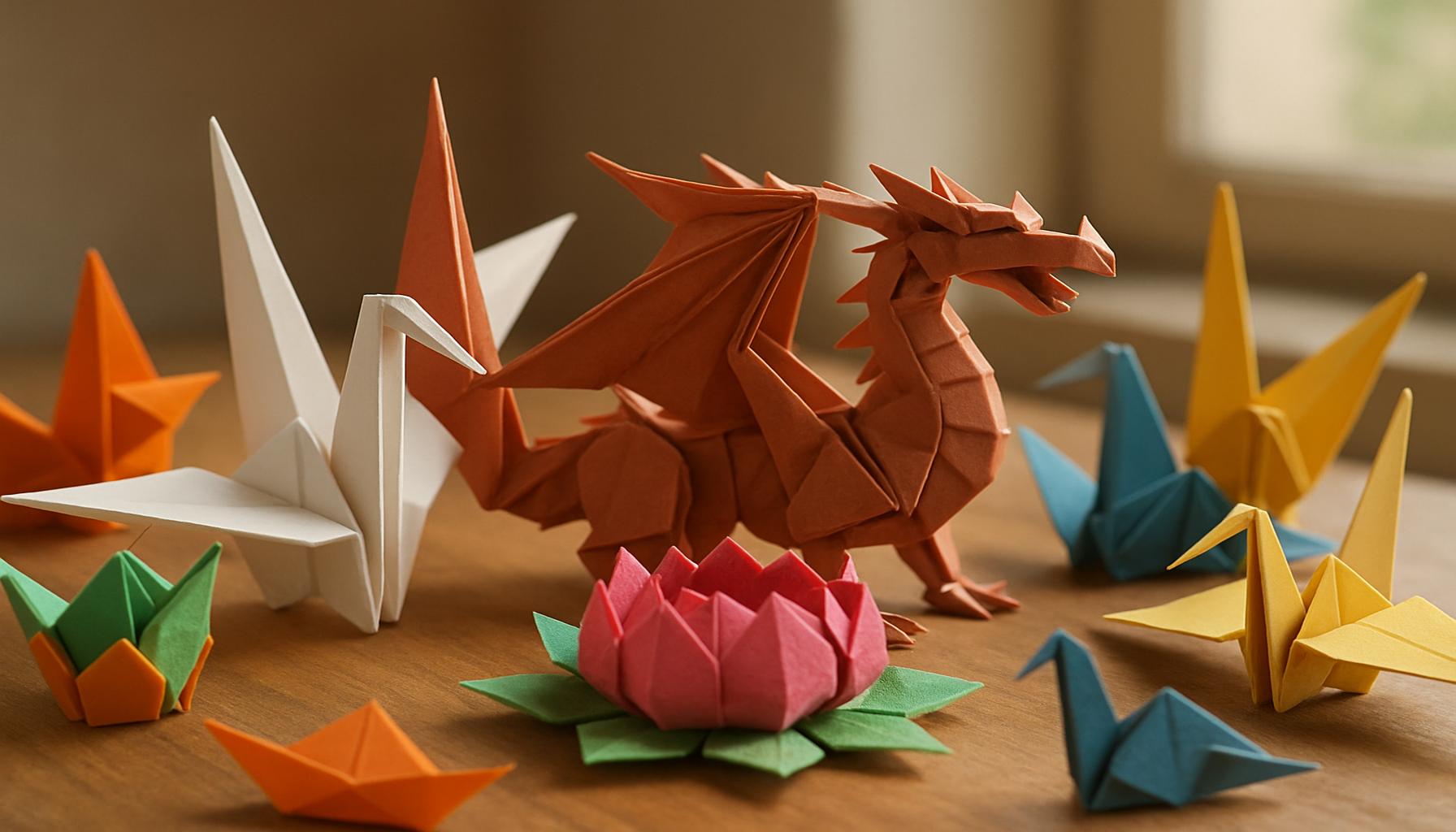
- Basic Folds: Valley, mountain, and reverse folds form the groundwork for many origami designs. Mastery of these folds is crucial; they serve as the essential building blocks for more complex structures. For example, the iconic origami crane relies on these fundamental techniques to achieve its delicate form.
- Modular Origami: This technique involves creating intricate designs by interlocking multiple pieces of paper. The most recognized example is the kusudama, which is not only beautiful but also often serves a functional purpose, such as a decorative ball or a hanging ornament. Such projects challenge the artist’s ability to maintain precision while working with several components.
- Wet Folding: Unlike traditional methods, wet folding allows for smoother curves and more organic shapes. Artists like Robert Lang have famously utilized this technique to create lifelike representations of animals, emphasizing the natural beauty of their forms through the fluidity of curves that a dry paper simply cannot achieve.
- Origamic Architecture: Merging origami and engineering, this innovative technique leads to the creation of intricate 3D structures. Scale models of famous landmarks like the Eiffel Tower or the Sydney Opera House illustrate the depth of imagination and precision involved in this style.
In the United States, origami workshops and clubs are increasingly popular, fostering a community of enthusiasts who share a fervor for this art form. These gatherings, whether in local libraries or community centers, cater to all skill levels. Participants can embrace their creativity by starting with simple projects, such as folding a basic crane, and gradually advancing to crafting elaborate dragon sculptures that challenge their finesse and patience. Moreover, the therapeutic benefits of origami, such as improved focus and reduced stress, enhance its appeal, drawing individuals seeking mindfulness and relaxation amid busy lifestyles.
Whether you’re an aspiring origami artist or simply curious about this remarkable craft, exploring the diverse techniques will inspire you to create your own paper masterpieces. The beauty of origami lies in its ability to transform mere sheets of paper into stunning works of art. For those looking to deepen their understanding, numerous resources—including books, online tutorials, and local classes—are available. Join us as we dive deeper into the fascinating world of origami techniques and discover how you can contribute to this captivating tradition.
DISCOVER MORE: Click here to learn how collaboration fuels creativity
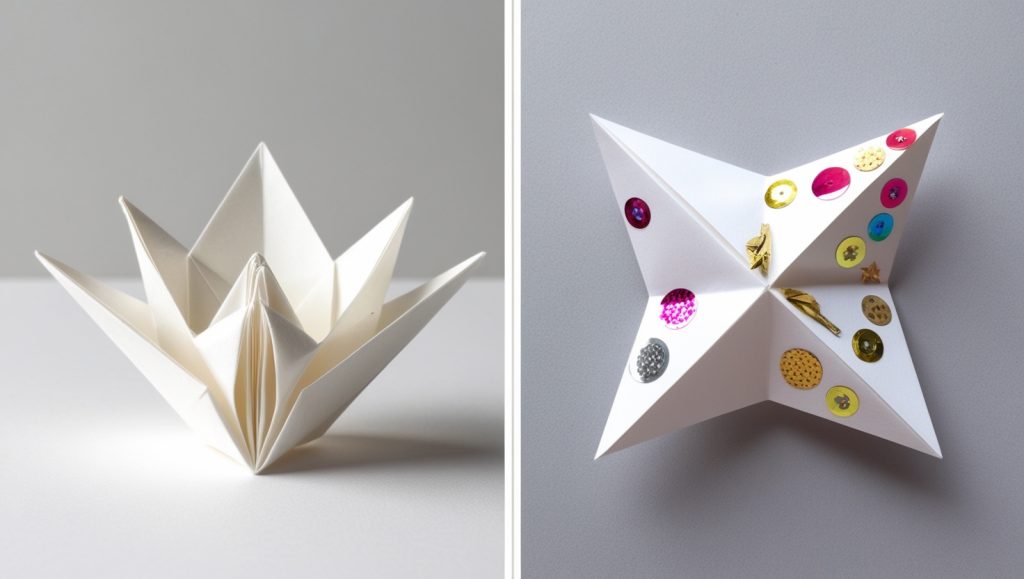
The Foundations of Origami Techniques
Understanding the core techniques of origami is essential for anyone looking to create stunning paper sculptures. These techniques not only serve as the fundamental building blocks of more intricate designs but also allow artists to explore their creativity and express their individuality through paper. As you embark on this journey into the art of origami, grasping these foundational methods will empower you to transform simple sheets of paper into mesmerizing works of art.
Basic Folds are the starting point for any origami artist. Mastering valley folds, mountain folds, and reverse folds is crucial for advancing to more complex designs. Each fold represents a different direction of the paper, influencing how the final design comes together. The classic origami crane, a symbol of peace and resilience, relies on these fundamental folds to achieve its elegant form. Once you have honed your skills in basic folds, you’ll find countless possibilities for creation.
Beyond the basic folds, modular origami invites artists to work with multiple pieces of paper, culminating in intricate three-dimensional designs. This technique often results in visually striking structures such as the kusudama, a spherical ornament composed of interconnected units. Assembling multiple components requires precision and patience, but the satisfaction of seeing separate pieces unite to form a cohesive masterpiece is unparalleled. Many enthusiasts enjoy the collaborative aspect of modular origami, often participating in group projects that foster creativity and camaraderie.
Wet folding is another innovative technique that pushes the boundaries of traditional origami. Unlike conventional dry folding, which is limited to sharp creases and angular shapes, wet folding allows for a fluid and organic aesthetic. This method involves dampening the paper before folding, which enhances its flexibility and enables artists to create smoother curves. Pioneers like Robert Lang have elevated the art to new heights, producing lifelike representations of animals and natural phenomena. The resulting structures possess a dynamic quality, capturing the viewer’s attention with their grace and movement.
For those interested in the intersection of art and engineering, origamic architecture showcases the versatility of origami techniques. This innovative approach blends the principles of origami with architectural design to create intricate 3D structures ranging from simple pop-up cards to complex replicas of famous landmarks. Enthusiasts can explore the works of artists who bring iconic buildings, such as the Golden Gate Bridge or the Colosseum, to life through precisely calculated folds and cuts. The depth of imagination required for origamic architecture highlights how origami can bridge the gap between art and scientific ingenuity.
With these foundational techniques in mind, aspiring artists can explore an endless universe of possibilities in origami. Whether you’re folding your first crane or aiming for more ambitious architectural projects, the beauty of origami lies in its ability to challenge and engage the mind. As you dive deeper into these techniques, you will not only refine your skills but also discover the joy of sharing this captivating art form with others.
| Technique | Description |
|---|---|
| Folding Techniques | Utilizing various folding methods, such as valley and mountain folds, allows for the creation of intricate designs. |
| Structural Integrity | Greatly enhances the visual appeal and durability of the sculptures, allowing for more complex shapes. |
| Design Variability | A broad range of designs can be achieved from a single sheet, emphasizing creativity and personal expression. |
| Artistic Expression | Transforms simple materials into captivating art pieces, merging craftsmanship with imaginative concepts. |
Origami techniques go beyond mere paper folding; they encapsulate the art of transformation, allowing enthusiasts to explore their creative limits. From the basic valley folds to more advanced locking mechanisms, every technique offers a new avenue for artistic exploration. The flexibility in design means that artists can create unique sculptures tailored to their personal style, making it an exciting medium for self-expression.Additionally, the combination of mathematical principles with artistic nuances in origami not only fosters better understanding of geometry but also enhances problem-solving skills. This intriguing fusion of art and science opens up discussions on educational applications and therapeutic uses, proving that origami is not just recreational but also a profound form of communication and learning. As artists delve deeper into origami, the elegant structures they create tell stories and evoke emotions, captivating audiences worldwide.
DISCOVER MORE: Click here for inspiration
Advanced Techniques: Unlocking New Dimensions in Origami
As origami artists progress, they often delve into advanced techniques that elevate their creations to remarkable levels of intricacy and beauty. These innovative methods expand the range of possibilities, allowing artists to explore not just the visual aesthetics but also the structural integrity of their artworks.
One such technique is kirigami, which combines the art of folding with cutting. Unlike traditional origami that relies solely on folds, kirigami incorporates precise cuts to create detailed patterns and shapes that enhance the dimensionality of the final piece. Often seen in intricate pop-up books or greeting cards, kirigami allows artists to experiment with negative space, transforming flat paper into elaborate structures that evoke depth and movement. This method has gained significant popularity in modern design, with artists utilizing any type of paper to produce unique holiday displays or decorative elements.
Another fascinating approach is action origami, where the finished piece can move or transform. This technique is often employed in educational settings, making use of dynamic designs that engage children and adults alike. One popular example is the simple yet magical flying butterfly which flaps its wings when a specific tab is pulled. Action origami encapsulates the whimsy of the art form, emphasizing the interplay between design and functionality.
Moreover, the field of mathematical origami showcases the connection between origami and mathematics, particularly geometric concepts. Artists leverage mathematical principles to create complex designs, often used in engineering solutions like folding solar panels for space missions. Researchers have explored mathematical theories such as the Huzita-Hatori axioms, a set of principles that govern the permissible folds in origami. Understanding these principles can lead artists to create impossible folds and structures that challenge the limits of traditional origami.
For those fascinated by the beauty of natural forms, modular tessellations provide a unique avenue for exploration. This technique involves assembling multiple smaller units in geometric arrangements, which can result in mesmerizing patterns reminiscent of fractals found in nature. By creating tessellated designs, origami artists can express the complexity and symmetry that exists in the biological world. Examples include insects, flowers, and human figures, often refined through the use of diverse paper types and textures to simulate contrasting natural elements.
The use of 3D printing technology also heralds a new era for origami enthusiasts. Artists are now able to blend traditional folding techniques with contemporary technology to create hybrid works. 3D printers can produce pieces that maintain intricate folds, offering a perfect intersection of art and technology. Many designers utilize software to develop patterns that can be transformed into physical sculptures, thereby enabling innovations beyond manual folding.
As the world of origami burgeons with such advanced techniques, artists continuously push creative boundaries. The diversity in methods fosters a vibrant community of artisans and enthusiasts, encouraging them to share knowledge and inspire one another. From action origami to mathematical principles, each technique unveils new pathways for exploration, making the journey of transforming paper into artistic sculptures both challenging and rewarding.
DIVE DEEPER: Click here to discover more creative prompts
Conclusion: The Endless Horizon of Origami
In conclusion, origami techniques serve as a fascinating gateway to artistic expression and innovation, enabling paper to transform into intricate sculptures that captivate the imagination. From traditional folds to cutting-edge methods like kirigami and 3D printing, the art of folding offers boundless creativity while bridging the gap between art and science.
The exploration of advanced techniques, including action origami and mathematical origami, highlights not only the aesthetic allure of paper art but also its practical applications in education and engineering. Artists are empowered by the ability to create dynamic forms that engage viewers and demonstrate the essence of movement and transformation. Modular tessellations evoke the harmony of nature, showcasing how origami can mimic complex biological structures with mesmerizing patterns.
Through continuous experimentation and collaboration among artists, the origami community thrives, fostering a dynamic exchange of ideas and techniques. This shared journey not only enriches the medium but also invites enthusiasts and novices alike to delve deeper into its captivating world. As we peer into the limitless potential of origami, we are reminded that each fold holds the promise of a new discovery, leading to a deeper understanding of both craft and creativity.
Ultimately, as we unfold the layers of origami techniques, we uncover an art form that transcends mere paper folding, encouraging us to think outside the box—literally and figuratively. Whether you are a seasoned artist or a curious beginner, the realm of origami remains open for exploration, offering a delightful blend of challenge, beauty, and innovation that continues to inspire generations.